My daughter and I took a trip to the NC Museum of History in downtown Raleigh yesterday afternoon. One of their many fascinating exhibits teaches about the “Toy Boom.” Going back in time to consider the impact of play is right up my alley!
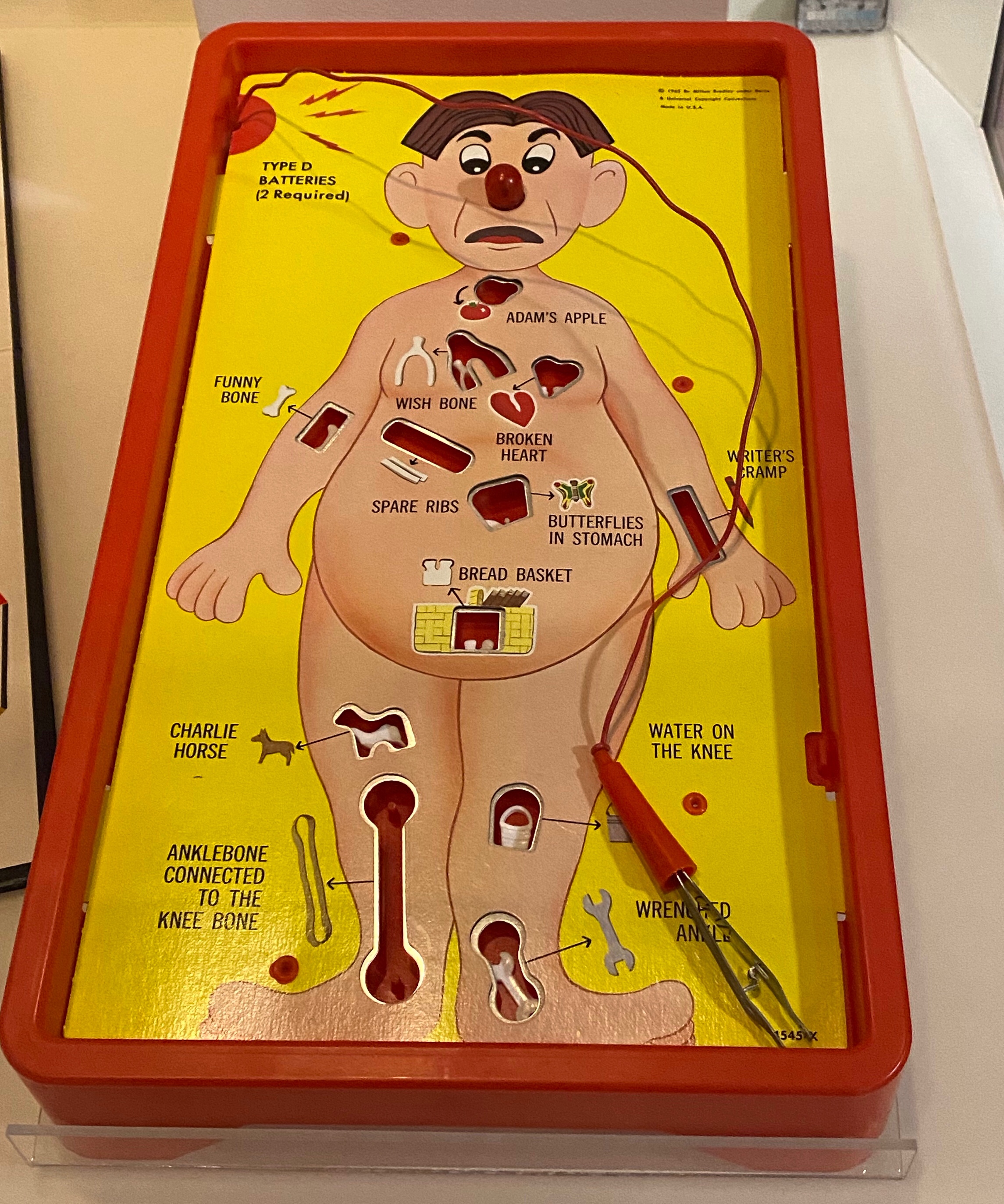
Before arriving, I hadn’t realized that the toys on exhibit were from the 1950s & 60s. Some I recognized from my dad’s stories, like an Erector Set. Some were still popular when I was child in the 80s, like G.I. Joe, View-Masters, and Gumby, and some of the toys are still hits with kids in 2021: Slinky, Twister, Mr. Potato Head, Candy Land, Barbie, Frisbee, Legos, Etch A Sketch, and Silly Putty. I was excited to find Mouse Trap, considering Santa dropped one down our chimney this past Christmas. Related to Christmas, a virtual Sears Christmas catalog was on display. My pen would run out ink before I could circle every toy I wanted.


My daughter and I learned a few things within the toy exhibit. I was relieved to see her confusion over the toys that promoted gender roles in society. For example, there were two separate “What Shall I Be?” board games about what career to pursue; the one for boys had pictures of astronauts, football players, and doctors, and the one for girls had pictures of flight attendants, socialites, and nurses. It was a nice segue to the exhibit downstairs about the suffragists.
What I learned was that some of the toys were developed and promoted with ulterior motives in mind. My takeaway was that our government recognized the benefits of learning through play; toys make learning more fun, and some of these new toys could eventually help to support our race for space and wartime efforts.


The exhibit also exposed the impact of commercial advertising once televisions replaced radios as a form of entertainment. The baby boom, economic prosperity, and an influx of televisions combined to make a great recipe for consumerism. Nowadays, kids eyes are still glued to screens: TVs, tablets, and smartphones. They see the advertisements, but it seems harder to peel them away long enough to actually play. My hope is that we adults remember how much fun we had with our toys, and spend more time sharing that love with our kids.


 Juvenescent Junkets