Adults seriously underrate the benefits of stuffed animals. (I’m writing this with my Pound Puppy, whom I named Cinnamon, resting in my lap.)
My whole life, I’ve felt more comfortable with pillows. Vegging out on the couch, taking long road trips, or sleeping, I’d always be hugging a pillow.
Study abstracts I’ve read declare that looking at cute animals lowers blood pressure, heart rate, and overall anxiety levels, while improving focus and performance on assignments and tasks.
Children surround themselves with stuffed animals, and are so happy. Adults are like, “No, stuffed animals are childish, so I will not have them, and I will be miserable instead.”
Here’s my advice: Adults need to toss their throw pillows and their egos out the window, and adopt a new comfort system: stuffed animals.
I run summer camps for kids, and we offer the campers Kindness Coins when they exhibit behaviors that are respectful or honest, or if they’re being a good sport, etc. At the end of the week, the kids can spend those coins at the camp store.
This past week, we transported 10 campers from a low-income neighborhood to join in our camp. When it was their time to buy their prizes, one of the boys held up a container of Play-Doh and asked what it was. I about fell over. I answered his question, but he was still confused as to what one does with it. I told him that he can mold it into different shapes and objects. I ended up giving him a few containers of it, because I just couldn’t stand knowing he had never played with Play-Doh before!
My blog posts are intended to help readers rediscover their childhoods, or to create new child-like experiences, but I’d like to add a new intention to the list: encourage my readers to help children live their best lives!
There are kids who have nothing to play with. Play helps us to learn and grow, and to have curiosities about and motivations for the future. And don’t forget how much joy they can bring into our lives! And yes, Christmas is a great time to donate, but kids like toys all the time! Some places to consider: foster homes, day cares, and womens’ shelters, or organizations like The Toy Foundation, Stuffed Animals For Emergencies, or Toys for Tots.
Please consider donating toys. While they are molding little creations from their imaginations, we can feel good about helping to mold our youth into happy little humans.
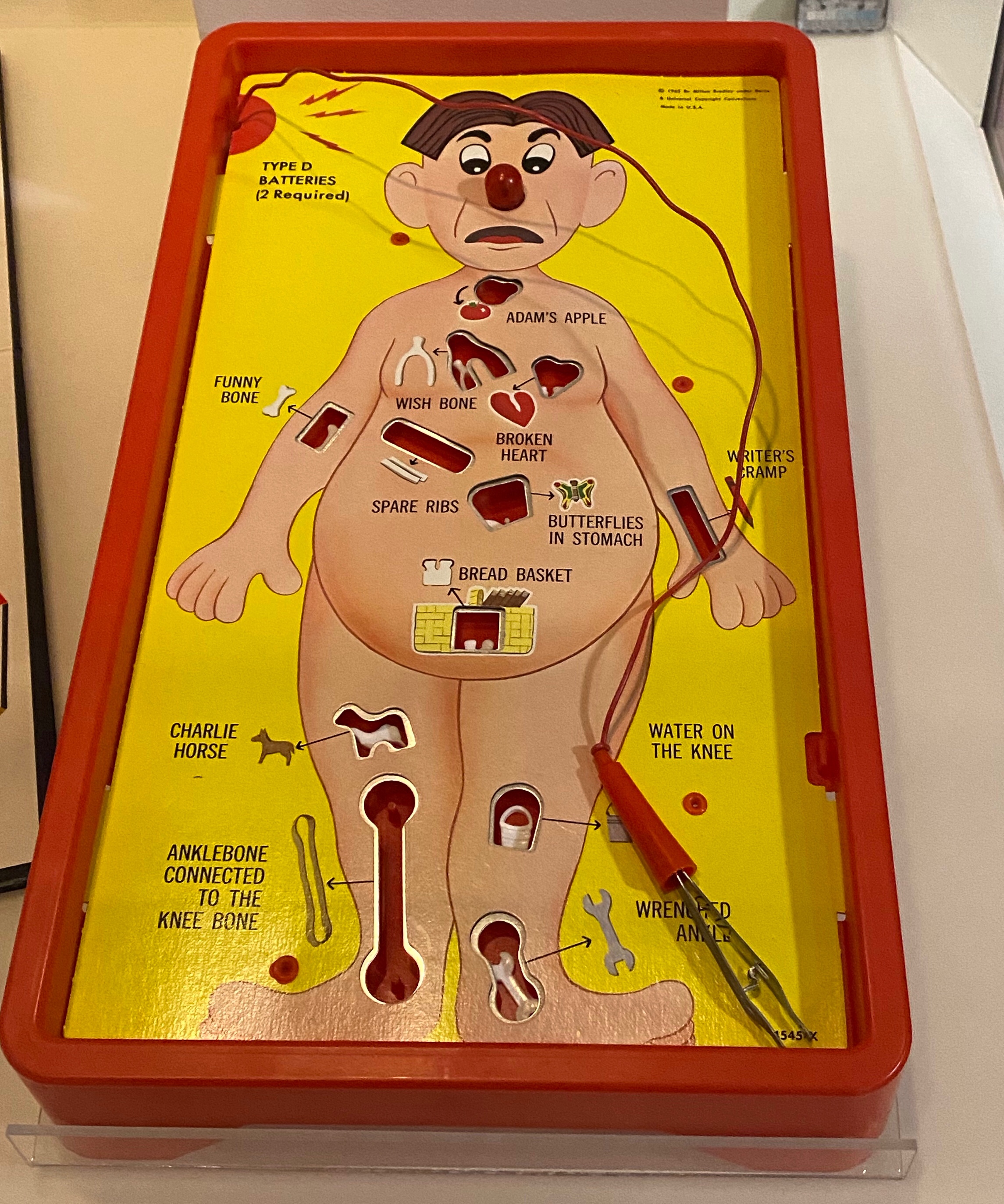
My daughter and I took a trip to the NC Museum of History in downtown Raleigh yesterday afternoon. One of their many fascinating exhibits teaches about the “Toy Boom.” Going back in time to consider the impact of play is right up my alley!
Before arriving, I hadn’t realized that the toys on exhibit were from the 1950s & 60s. Some I recognized from my dad’s stories, like an Erector Set. Some were still popular when I was child in the 80s, like G.I. Joe, View-Masters, and Gumby, and some of the toys are still hits with kids in 2021: Slinky, Twister, Mr. Potato Head, Candy Land, Barbie, Frisbee, Legos, Etch A Sketch, and Silly Putty. I was excited to find Mouse Trap, considering Santa dropped one down our chimney this past Christmas. Related to Christmas, a virtual Sears Christmas catalog was on display. My pen would run out ink before I could circle every toy I wanted.
My daughter and I learned a few things within the toy exhibit. I was relieved to see her confusion over the toys that promoted gender roles in society. For example, there were two separate “What Shall I Be?” board games about what career to pursue; the one for boys had pictures of astronauts, football players, and doctors, and the one for girls had pictures of flight attendants, socialites, and nurses. It was a nice segue to the exhibit downstairs about the suffragists.
What I learned was that some of the toys were developed and promoted with ulterior motives in mind. My takeaway was that our government recognized the benefits of learning through play; toys make learning more fun, and some of these new toys could eventually help to support our race for space and wartime efforts.
The exhibit also exposed the impact of commercial advertising once televisions replaced radios as a form of entertainment. The baby boom, economic prosperity, and an influx of televisions combined to make a great recipe for consumerism. Nowadays, kids eyes are still glued to screens: TVs, tablets, and smartphones. They see the advertisements, but it seems harder to peel them away long enough to actually play. My hope is that we adults remember how much fun we had with our toys, and spend more time sharing that love with our kids.


 Juvenescent Junkets